An article by Michaela Jaterková and Jana Karlová in the prestigious journal Medical Humanities
Featured image::
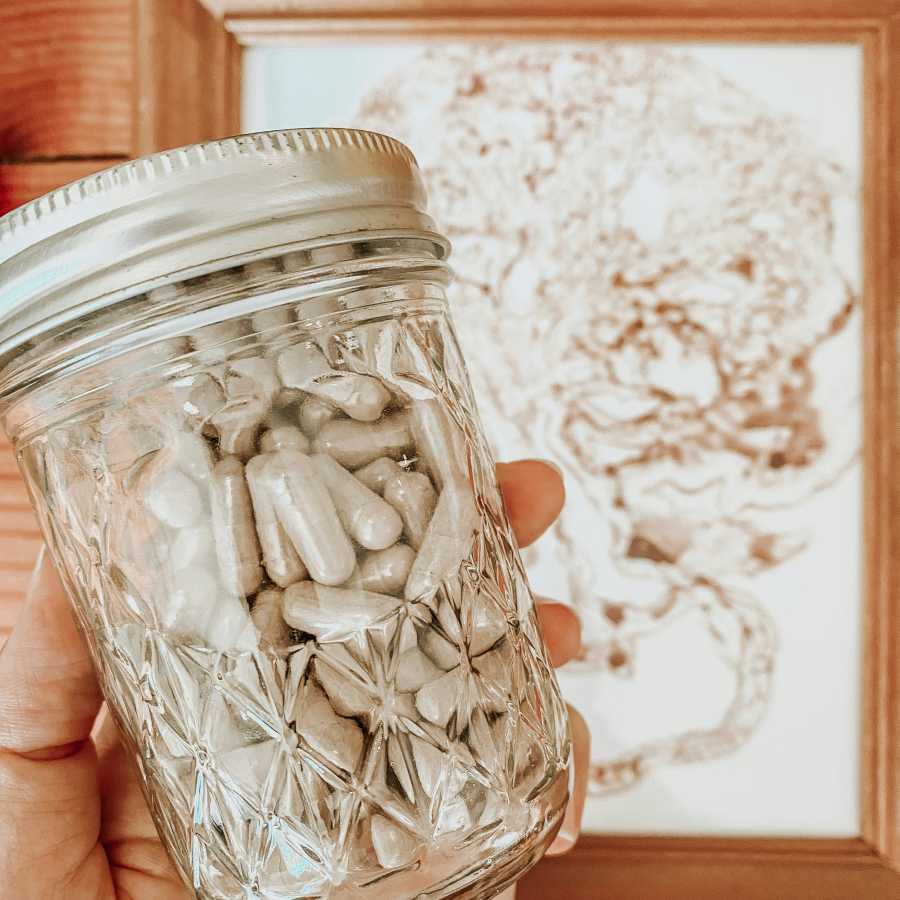
Placentophagy: self-trust and embodied entanglements in Czech society
An article co-authored by Michaela Jaterková and Jana Karlová was published today in the prestigious British journal Medical Humanities. The text, written by a student and a faculty member, is based on a master’s thesis and a specific research project. It is the first Czech study to examine the motivations and perspectives of women who consume their placenta in some form after childbirth.
Michaela studied the master’s program in Transcultural Communication at the Department of Cultural and Religious Studies, completing her studies in June 2025. In the fall, she presented her project at a conference in Lausanne, Switzerland. She subsequently joined the RESOURCE environmental project at the Institute of Ethnology of the Czech Academy of Sciences and began her doctoral studies at the Faculty of Social Sciences at Charles University.
In the Czech context, the topic of placentophagy has not yet been systematically explored. In interviews, women spoke, for example, about trust in their own bodies, efforts to support their physical and mental health, or a sense of connection with nature. A certain distrust of technocratic medicine was also frequently expressed, along with a need for greater autonomy and active involvement during this important life event.
Placentophagy is a highly controversial yet fascinating topic—and also an example of cross-cultural communication in a somewhat unexpected context. Even though everyone strives for the well-being of both mother and child, it is by no means easy to listen to one another and reach mutual understanding. This study seeks to describe the motivations and reasoning of women who have chosen placentophagy. And in doing so, perhaps open the door to dialogue rather than conflict.
Karlová J., Jaterková M. Placentophagy: self-trust and embodied entanglements in Czech society. Medical Humanities Published Online First: 17 March 2026. doi: 10.1136/medhum-2025-013718
Abstract:
This qualitative study examines placentophagy—the consumption of one’s own placenta after birth—among women in Czechia, where the practice is increasingly visible despite lacking cultural tradition or expert consensus. Drawing on 18 semistructured interviews, we explore interlocutors’ motivations, perspectives and the broader discursive context. Interlocutors described placentophagy as a practice of care, oriented towards physical and emotional recovery and grounded in self-trust, bodily autonomy and a sense of connection with nature. Their accounts resonate with ecological thinking and a monistic worldview that positions humans and nature as interconnected, while also reflecting ambivalent or strained relations with specialised biomedical authority. The study illustrates how the placenta acquires multiple and shifting identities—as waste, therapeutic tool and symbol of entanglement or ritual object. Foregrounding these perspectives highlights placentophagy as more than a marginal or curious practice: it offers insight into negotiations of health, agency and trust in contemporary obstetric care. By attending to women’s lived experience, the study contributes to debates about how biomedical and experiential frameworks might be placed in dialogue rather than opposition.
Photo by Tissa O’Grady on Unsplash
Featured image::